
You know where you’ll always find me? In my garden. I absolutely love gardening. There’s something so satisfying about nurturing plants, watching them grow, and seeing all your hard work pay off. But let’s be real—gardening isn’t always a walk in the park. One of the biggest headaches is dealing with pests. And sometimes, it’s tough to know which critters are friends and which ones are foes.
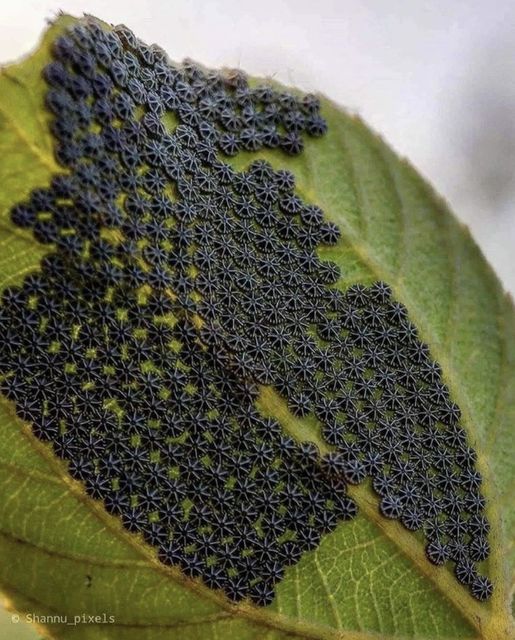
Recently, I saw a photo making the rounds on social media that really shows this confusion well. When I first looked at it, I was shocked. The photo showed a leaf covered in these tiny, intricate, black patterns. At first glance, it seemed like the leaf had some alien design on it or was affected by some bizarre disease. I, like many others, had no clue what it was.
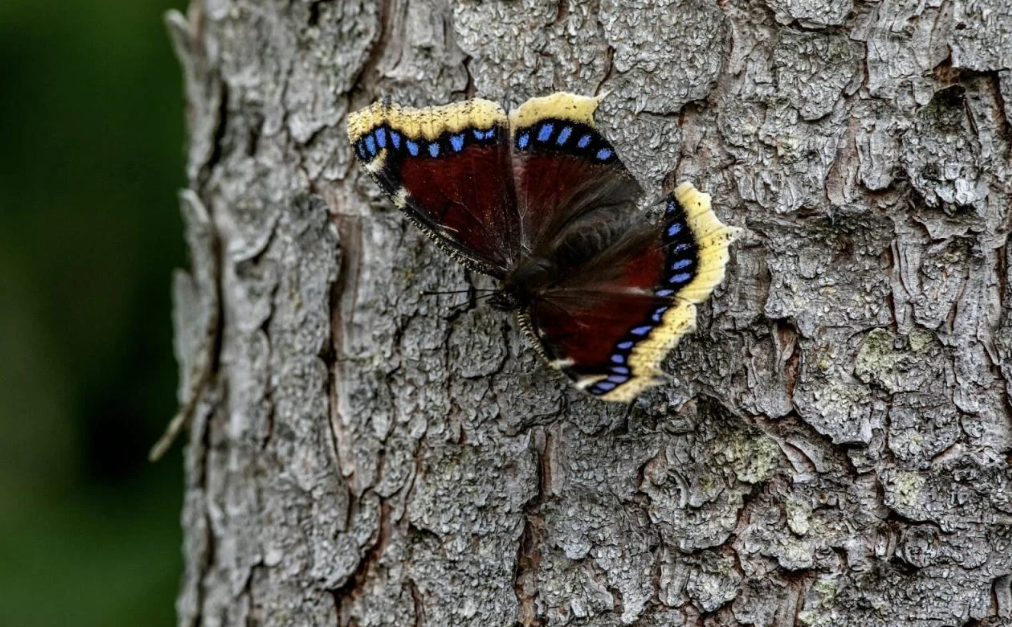
After some digging, I found out that those strange patterns are actually the eggs of the Nymphalis Antiopa butterfly. For those who may not know, the Nymphalis Antiopa, or the Mourning Cloak butterfly, has a unique life cycle and some fascinating habits.
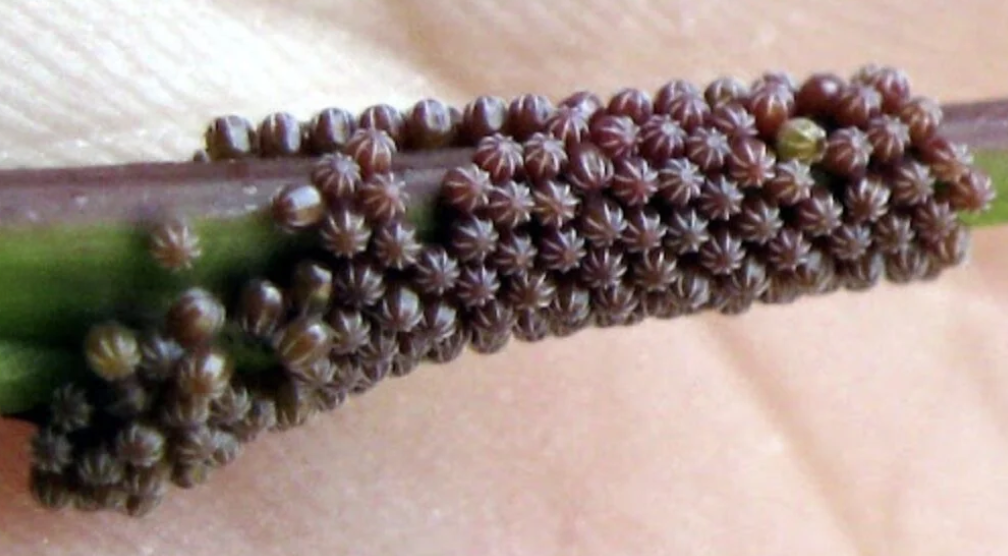
First, let’s talk about the eggs. The photo I saw was a close-up of these eggs on a leaf. They look almost like delicate black lace covering the surface. It’s really quite beautiful once you get past the initial shock. The eggs are laid in clusters, and each tiny egg is a perfect little geometric marvel. Initially, I thought, “This is either going to be great for my garden or a disaster.”
The good news is the Nymphalis Antiopa butterfly is actually beneficial. The larvae, or caterpillars, feed on leaves but usually prefer trees and shrubs like willows, elms, and poplars. So if you have a garden full of flowers and veggies, you’re probably safe. Plus, these butterflies help out by feeding on rotting fruit, aiding in decomposition.
Watching these butterflies go through their life stages is fascinating. After hatching from those intricate eggs, the caterpillars emerge. They’re black with tiny white spots and have spiny, bristly bodies. They go through several stages, known as instars, shedding their skin and growing larger each time.
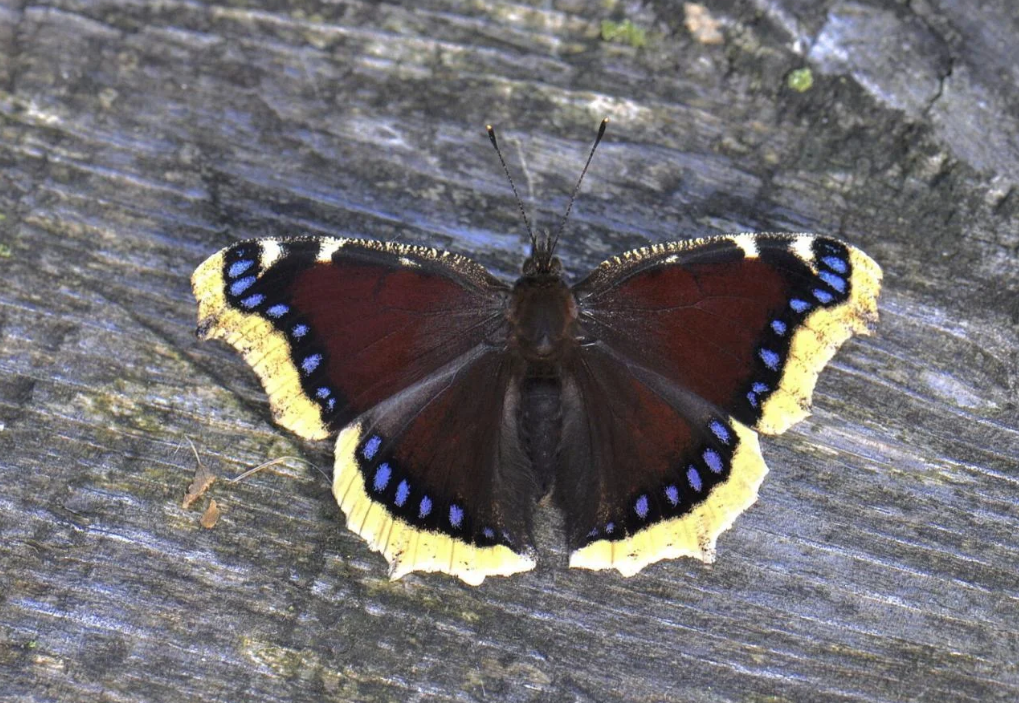
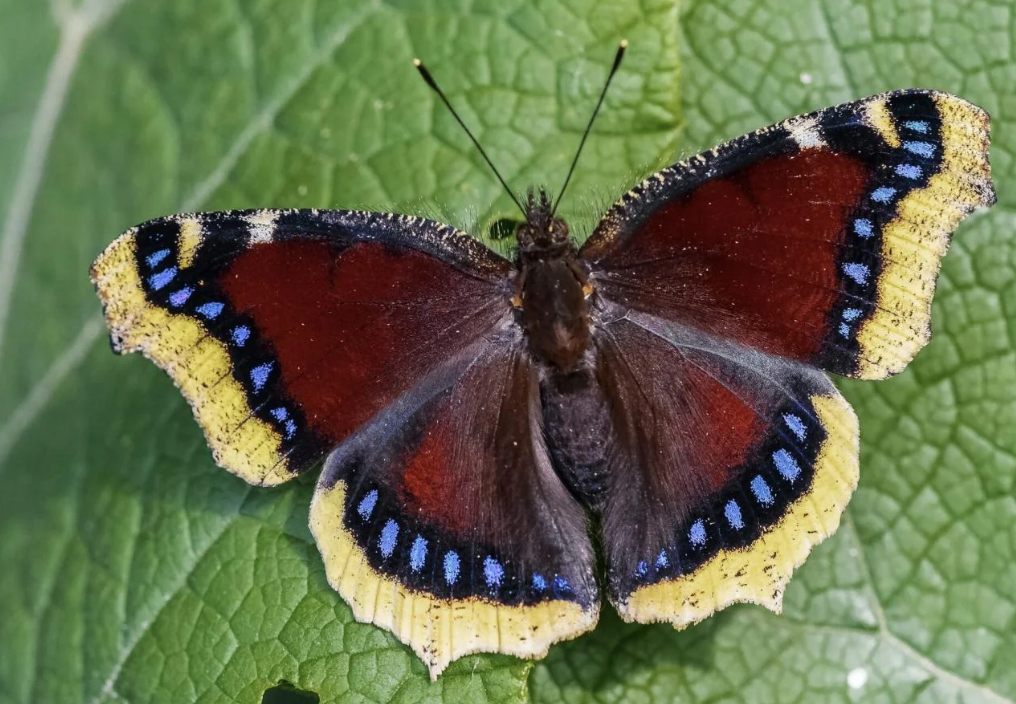
When fully grown, the caterpillars find a safe place to pupate. They spin a chrysalis, a bit like a sleeping bag where they undergo their transformation. This stage can last from a couple of weeks to several months, depending on the climate and time of year. When they finally emerge, they’re beautiful Mourning Cloak butterflies with dark, velvety wings bordered with a bright yellow edge and adorned with blue spots.
One of the most interesting things about Mourning Cloak butterflies is their behavior. Unlike many other species, these butterflies hibernate during the winter. They find a cozy spot under loose bark, in a pile of wood, or even in an old shed. When spring arrives, they are some of the first butterflies you will see, often even before the flowers start to bloom. This early appearance is partly why they’re called Mourning Cloaks—the dark, somber wings against the stark, early spring landscape look a bit like a mourning garment.
As gardeners, we often focus on the immediate impact of insects on our plants. When we see caterpillars, we think, “Oh no, they’re going to eat everything!” But it’s important to take a step back and look at the bigger picture. The Nymphalis Antiopa butterfly shows us how nature balances itself out. Yes, the caterpillars will eat some leaves, but they’re not going to destroy your garden. In fact, by making a home for these butterflies, you’re helping to create a healthier ecosystem.
So what should you do if you find these eggs or caterpillars in your garden? My advice is to let them be. Enjoy watching the process and the transformation. If you’re really worried about your plants, you can gently move the caterpillars to a tree or shrub where they’ll be happier and less likely to nibble on your prized flowers.
Gardening is all about balance. It’s about finding harmony between the plants you love and the creatures that share your space. Next time you see something odd in your garden, take a moment to investigate before reaching for the insecticide. You might just discover something amazing, like I did with the Nymphalis Antiopa butterfly eggs.
In the end, it’s all part of the gardening adventure. Each season brings new surprises and new challenges, but that’s what makes it so rewarding.

Dedicated to researching and publishing informative content related to gig work, freelance opportunities, remote jobs, online earning options, and career development. Committed to delivering accurate, reader-friendly, and useful information for individuals seeking flexible work opportunities.