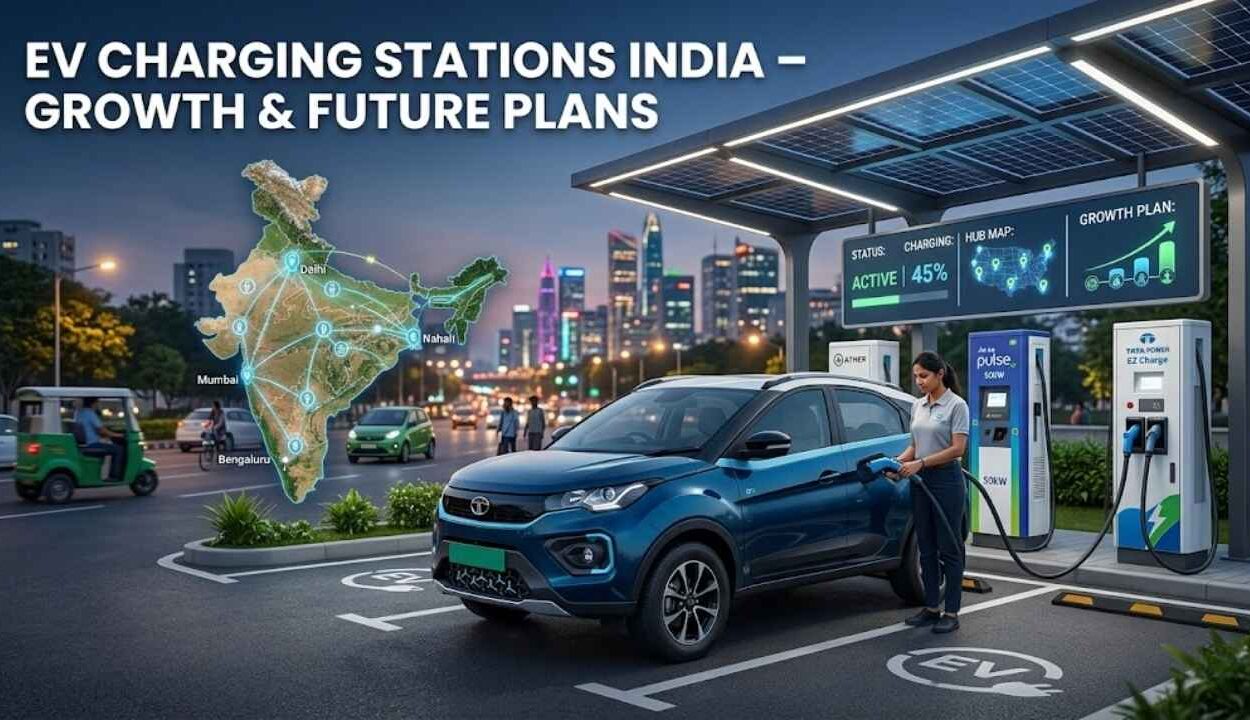
India is rapidly moving towards electric mobility, and EV charging infrastructure is becoming the backbone of this transformation. With increasing fuel prices, environmental concerns, and government support, electric vehicles (EVs) are gaining popularity across the country. The development of EV charging stations is not just supporting vehicle adoption but also creating a large ecosystem of jobs, investments, and technological advancements.
Major players like Tata Power, Reliance Industries, and Adani Group are actively expanding EV charging networks across India. These companies are investing heavily in infrastructure to support the growing demand for electric mobility.
You can explore more about EV infrastructure here:
https://en.wikipedia.org/wiki/Electric_vehicle_charging_station
Official career pages:
https://careers.tatapower.com
https://www.ril.com/Careers.aspx
Growth of EV Charging Network and Key Industry Players
India’s EV charging network has expanded significantly in recent years. Companies like Tata Power are leading the market with thousands of charging stations installed across highways, cities, and commercial hubs. Similarly, Reliance Industries is building integrated energy solutions, including EV charging infrastructure.
Other key players include:
- Ather Energy
- Ola Electric
- Fortum
These companies are competing to provide faster, more accessible, and affordable charging solutions.
Popular EV Models and Market Competition
The growth of EV charging stations is directly linked to the increasing demand for electric vehicles.
Most Popular EV Models
- Tata Nexon EV
- MG ZS EV
- Ather 450X
- Ola S1 Pro
Competitors in EV Market
- Tata Motors
- Mahindra Electric
- BYD
The competition is driving innovation in battery technology, charging speed, and vehicle affordability.
Investment and Expansion in EV Infrastructure
The EV charging sector in India is witnessing massive investments from both private and public sectors.
- Government of India launched schemes like FAME to promote EV adoption
- Adani Group is investing in renewable energy-powered charging stations
- Reliance Industries is building integrated energy ecosystems
These investments are helping India move towards sustainable transportation while creating job opportunities.
Charging Station Infrastructure and Locations in India
EV charging stations are being installed across major cities and highways.
Key Locations
- Delhi
- Mumbai
- Bengaluru
- Hyderabad
Infrastructure Components
- Fast chargers
- Battery swapping stations
- Smart energy management systems
These stations act like “energy hubs” supporting EV users nationwide.
Helper Jobs in EV Charging Sector
The expansion of EV charging infrastructure has created many entry-level job opportunities.
Responsibilities
- Assisting in charger installation
- Handling cables and equipment
- Supporting maintenance teams
- Ensuring site cleanliness
Eligibility
- 8th, 10th, or 12th pass
Age Limit
- 18 to 35 years
Skills Required
- Basic technical knowledge
- Physical fitness
- Teamwork
Salary Range
- ₹12,000 – ₹18,000 per month
Benefits
- Training programs
- Overtime pay
- Career growth
Other Job Roles in EV Industry
Technical Roles
- Electrician
- Charging Station Technician
- Maintenance Engineer
Non-Technical Roles
- Security Guard
- Driver
- Warehouse Staff
Advanced Roles
- Energy Analyst
- Project Manager
Salary Structure in EV Charging Sector
| Job Role | Monthly Salary (Approx) |
|---|---|
| Helper | ₹12,000 – ₹18,000 |
| Technician | ₹18,000 – ₹30,000 |
| Electrician | ₹20,000 – ₹35,000 |
| Supervisor | ₹30,000 – ₹50,000 |
| Engineer | ₹40,000 – ₹80,000 |
Application Process for EV Jobs
Steps to Apply
- Visit official career websites
- Register and upload resume
- Search for job roles
- Apply online
- Attend interviews
Other Options
- Job portals (Naukri, Indeed)
- Contractor hiring
- Walk-in interviews
Frequently Asked Questions
What education is required?
Basic education for helper roles; technical qualifications for advanced roles.
Is experience needed?
Not required for entry-level jobs.
Are jobs permanent?
Many start as contract-based.
Working hours?
Shift-based work.
Tips for Job Applicants
- Verify job offers
- Avoid fraud agents
- Improve technical skills
- Stay physically fit
Future Growth of EV Charging in India
The EV charging sector is expected to grow rapidly in the coming years. Companies like Tata Power are planning to expand their networks across highways and rural areas.
Why EV Charging Jobs Are a Good Career Option
The EV industry offers stable jobs, career growth, and exposure to modern technology. Entry-level workers can grow into skilled professionals with experience.
Final Thoughts on EV Charging Growth in India
India’s transition to electric mobility is creating thousands of job opportunities. With strong government support and private investments, the EV charging sector is set to become one of the fastest-growing industries in the country.
Keywords: EV charging jobs India, electric vehicle jobs 2026, Tata Power careers, EV technician jobs India, charging station jobs apply online, fresher jobs EV sector India, high salary EV jobs India
Expansion of Highway EV Charging Corridors in India
The development of EV charging corridors along highways is a major step in strengthening India’s electric mobility ecosystem. Companies like Tata Power are installing fast-charging stations across national highways to enable long-distance EV travel. These corridors connect major cities such as Delhi and Mumbai, ensuring that EV users can travel without range anxiety. The government is also supporting these initiatives by providing subsidies and policy incentives. Highway charging infrastructure requires continuous maintenance, creating job opportunities for technicians, helpers, and support staff. As more EVs hit the roads, the demand for reliable charging networks will increase, making highway corridors a critical component of India’s EV future. This expansion is expected to boost tourism, logistics, and intercity travel while promoting sustainable transportation.
Role of Renewable Energy in EV Charging Stations
Renewable energy is playing a crucial role in powering EV charging stations across India. Companies like Adani Group are integrating solar and wind energy solutions into charging infrastructure. This approach reduces dependency on fossil fuels and lowers operational costs. In cities like Bengaluru, solar-powered charging stations are becoming increasingly common. The integration of renewable energy not only supports environmental sustainability but also creates job opportunities in installation, maintenance, and energy management. Workers with basic technical knowledge can enter this field and gradually specialize in renewable energy systems. As India continues to focus on green energy, the combination of EVs and renewable power will play a significant role in achieving sustainability goals.
Growth of Battery Swapping Technology in India
Battery swapping is emerging as an alternative to traditional EV charging methods. Companies such as Ola Electric are exploring this technology to reduce charging time and improve convenience for users. Instead of waiting for a battery to charge, users can simply swap it with a fully charged one at designated stations. This model is particularly beneficial for commercial vehicles and delivery services operating in busy cities like Delhi. Battery swapping infrastructure requires specialized facilities and trained personnel, creating additional employment opportunities. As the technology evolves, it is expected to complement traditional charging stations, providing more flexibility to EV users and supporting the rapid growth of electric mobility in India.
Impact of EV Charging Infrastructure on Real Estate
The rise of EV charging stations is influencing the real estate sector in India. Commercial properties and residential complexes are increasingly incorporating charging facilities to attract tenants and buyers. Developers in cities like Mumbai are integrating EV infrastructure into their projects, making them future-ready. This trend is creating demand for electricians, technicians, and maintenance staff who can install and manage charging systems. The presence of EV charging stations is also increasing property value, as it adds convenience for residents and businesses. As electric vehicle adoption grows, real estate developers will continue to invest in charging infrastructure, further expanding job opportunities in this sector.
Government Policies Supporting EV Charging Growth
The Government of India has introduced several policies to promote EV adoption and charging infrastructure development. Initiatives such as FAME (Faster Adoption and Manufacturing of Electric Vehicles) provide financial incentives to companies and consumers. These policies aim to reduce the cost of EVs and encourage the installation of charging stations across the country. In cities like Hyderabad, state governments are also offering subsidies and tax benefits to support EV infrastructure. These efforts are creating a favorable environment for investment and innovation, leading to rapid growth in the sector. As policies continue to evolve, they will play a key role in shaping the future of electric mobility in India.
Job Opportunities in EV Charging Startups
Startups are playing a significant role in the EV charging ecosystem. Companies focusing on innovative solutions are emerging rapidly, creating job opportunities for freshers and experienced professionals. Platforms supported by Reliance Industries are encouraging entrepreneurship in this sector. Startups require a wide range of skills, from technical expertise to business development and marketing. This diversity makes the EV charging industry an attractive option for job seekers. As startups continue to grow, they will contribute to the expansion of charging infrastructure and create new employment opportunities across India.
Importance of Smart Charging Technology
Smart charging technology is transforming the way EV charging stations operate. These systems use advanced software to optimize energy consumption and reduce costs. Companies like Tata Power are implementing smart charging solutions in urban areas such as Bengaluru. Smart chargers can adjust charging speed based on demand and grid conditions, ensuring efficient energy use. This technology also enables remote monitoring and maintenance, reducing operational challenges. The adoption of smart charging systems is creating job opportunities in software development, data analysis, and system management, making it a promising field for tech-savvy professionals.
EV Charging and Its Role in Reducing Pollution
EV charging infrastructure is directly contributing to the reduction of air pollution in India. By supporting electric vehicles, companies like Adani Group are helping reduce carbon emissions. In densely populated cities such as Delhi, the shift to electric mobility is improving air quality and public health. The environmental benefits of EV adoption are encouraging more people to switch from traditional fuel vehicles. This transition is also creating awareness about sustainable practices and the importance of clean energy. As EV charging networks expand, their impact on the environment will continue to grow, making them an essential part of India’s sustainability efforts.
Role of Private Companies in EV Infrastructure Expansion
Private companies are driving the rapid expansion of EV charging infrastructure in India. Organizations like Reliance Industries are investing heavily in building nationwide charging networks. These companies are leveraging their expertise in energy and technology to develop efficient and scalable solutions. In cities like Mumbai, private investments are accelerating the deployment of charging stations. This involvement is crucial for meeting the growing demand for EV infrastructure and ensuring its long-term sustainability. As private companies continue to invest in this sector, they will play a key role in shaping the future of electric mobility in India.
Future Scope of EV Charging Jobs in India
The future of EV charging jobs in India is highly promising. With increasing adoption of electric vehicles, the demand for skilled workers will continue to rise. Companies like Tata Power are expected to create thousands of jobs in the coming years. These opportunities will span across installation, maintenance, operations, and management roles. For job seekers, this sector offers a stable career path with growth potential. Continuous learning and skill development will be essential for success in this field, as technology continues to evolve.
Salary Growth in EV Sector
| Role | Before EV Boom | Current Salary | Growth |
|---|---|---|---|
| Helper | ₹10,000 | ₹15,000 | 30% |
| Technician | ₹15,000 | ₹25,000 | 40% |
| Engineer | ₹30,000 | ₹60,000 | 50% |
Companies like Tata Power are offering better salaries due to high demand.
EV Charging vs Fuel Stations Comparison
| Feature | EV Charging | Fuel Station |
|---|---|---|
| Energy Source | Electricity | Petrol/Diesel |
| Pollution | Low | High |
| Maintenance | Moderate | High |
The shift is supported by Government of India policies.
Job Demand in EV Sector
| Role | Demand | Sector |
|---|---|---|
| Helper | High | Installation |
| Technician | Very High | Maintenance |
| Engineer | High | Development |
Demand is rising due to companies like Adani Group.
Skills Requirement in EV Industry
| Skill | Importance | Role |
|---|---|---|
| Electrical Knowledge | High | Technician |
| Physical Fitness | High | Helper |
| Problem Solving | Medium | Engineer |
Training programs are expanding nationwide.
Regional Growth of EV Charging Jobs
| Region | Growth | Opportunities |
|---|---|---|
| North India | High | Infrastructure |
| South India | Very High | Tech Jobs |
| West India | High | Manufacturing |
Cities like Bengaluru lead growth.
Integration of EV Charging with Smart Cities
EV charging infrastructure is becoming an integral part of smart city projects in India. Urban centers like Hyderabad are incorporating charging stations into their planning to support sustainable transportation. This integration ensures better resource management and improved urban mobility. Smart city initiatives are creating new job opportunities in infrastructure development and management.
Role of AI in EV Charging Management
Artificial intelligence is being used to optimize EV charging operations. AI systems can predict demand, manage energy distribution, and improve efficiency. Companies like Reliance Industries are investing in such technologies.
Growth of EV Ecosystem in India
The EV ecosystem includes manufacturers, charging providers, and service companies. This interconnected network is driving innovation and growth across the sector.
Importance of Training and Certification
Training programs are essential for developing skilled workers in the EV sector. Certification courses are helping individuals gain technical expertise.
Expansion of Public Charging Stations
Public charging stations are increasing in number, making EVs more accessible to users across India.
Role of Logistics Industry in EV Adoption
The logistics sector is adopting EVs to reduce costs and emissions, increasing demand for charging infrastructure.
Impact of EV Charging on Employment
The expansion of EV charging networks is creating thousands of jobs, contributing to economic growth.
Long-Term Vision for EV Infrastructure
India aims to build a comprehensive EV charging network that supports widespread adoption of electric vehicles.
Growth of Green Energy Jobs
The EV sector is creating opportunities in renewable energy, contributing to sustainable development.
Future of Electric Mobility in India
Electric mobility is expected to dominate the transportation sector, supported by strong infrastructure and policies.
Role of EV Charging in Ride-Sharing and Fleet Services
The adoption of electric vehicles in ride-sharing and fleet services is accelerating the demand for EV charging stations across India. Companies operating in urban centers like Delhi and Bengaluru are transitioning their fleets to electric models to reduce operational costs and meet sustainability goals. Charging infrastructure developed by firms such as Tata Power is supporting this transition by offering fast and reliable charging solutions. Fleet operators require dedicated charging hubs, creating new employment opportunities in station management, maintenance, and operations. This shift is also encouraging partnerships between EV manufacturers and service providers, further strengthening the ecosystem. As ride-sharing continues to grow, EV charging stations will play a crucial role in ensuring uninterrupted services and promoting clean transportation.
Challenges and Future Innovations in EV Charging Technology
Despite rapid growth, the EV charging sector faces challenges such as high installation costs, limited charging speed in some areas, and the need for standardization. Companies like Reliance Industries are investing in research to develop faster and more efficient charging technologies. Innovations such as ultra-fast chargers, wireless charging, and improved battery systems are expected to address these challenges. In cities like Mumbai, pilot projects are being conducted to test advanced solutions. These innovations will not only enhance user experience but also create specialized job roles in research and development. As technology evolves, the EV charging industry will continue to expand, offering new opportunities for growth and innovation.